



Video CDN for live streaming and video hosting
Global low-latency delivery of HLS, LL-HLS & DASH for live and VOD. Gcore CDN handles distribution you keep full control of encoding, packaging, storage & player.

Why video teams need dedicated CDN
Low-latency delivery
Deliver HLS, LL-HLS, and MPEG-DASH through a network built for low-latency playback, live caching in RAM, and immediate first-byte delivery while the rest of the stream arrives.
Origin protection at scale
Absorb spikes from premieres, sports, and breaking news with 210+ edge locations, 200+ Tbps capacity, origin shielding, and patterns designed for 10M+ viewer events.
Programmable edge logic
Run custom logic at the edge with FastEdge to validate tokens, rewrite URLs and headers, route traffic by business rules, and enforce delivery decisions before requests reach origin.
When to use Video CDN instead of a full streaming platform
Use Gcore's video CDN when you need global edge delivery, advanced caching, and security controls while maintaining full control over transcoding, packaging, and origin architecture.
- Delivery-only model: No transcoding, no storage charges, pure CDN infrastructure with 210+ POPs with 200+ Tbps capacity.
- Origin agnostic: Connect S3-compatible storage, live packagers, third-party transcoders, or custom origin servers without vendor lock-in
- Multi-CDN capable: Deploy as primary delivery layer or integrate into multi-CDN strategy for geographic or cost optimization
- Custom domains and SSL: Branded delivery URLs with managed certificates for enterprise-grade presentation
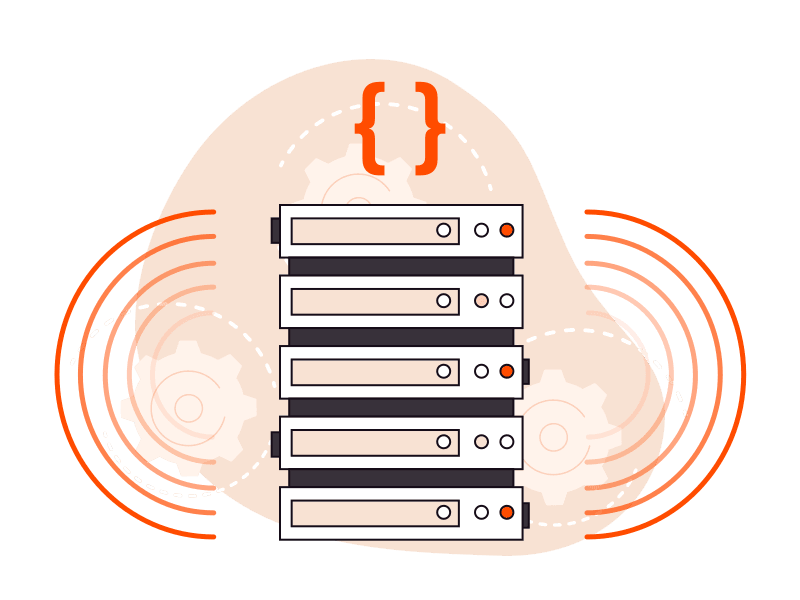
How Gcore Video CDN handles live and VOD workloads
Gcore's CDN infrastructure is engineered specifically for video delivery challenges.
- Protocol flexibility: Support for HLS MPEG-TS, LL-HLS CMAF, LL-DASH CMAF, HTTP-FLV endless streaming, MP4/WebM/MP3 progressive download, etc
- Long-poll manifest requests: Edge infrastructure handles long-awaited requests for LL-HLS manifests that block until new segments are ready on origin, eliminating inefficient polling loops
- Multi-byterange optimization: Simultaneous multi-range requests with progressive download handling for large MP4 files, enabling instant playback while downloading continues
- Petabyte-scale library management: Proven infrastructure handling hundreds of petabytes of video assets with intelligent cache eviction and geographic distribution strategies
- Advanced origin shielding: Geographically dispersed shield nodes reduce origin load through hierarchical caching, protecting origins from cache stampede during viral events or premieres

Video content security and access control
Gcore provides multiple security mechanisms to control who can access your video content and from where.
- Secure tokens with configurable TTL for time-limited access to HLS/DASH manifests and segments
- Geo-blocking by country to restrict delivery to specific regions or comply with licensing requirements
- IP allowlists and blocklists for corporate network access control or blocking malicious traffic
- Referrer domain restrictions to prevent embedding on unauthorized websites or apps
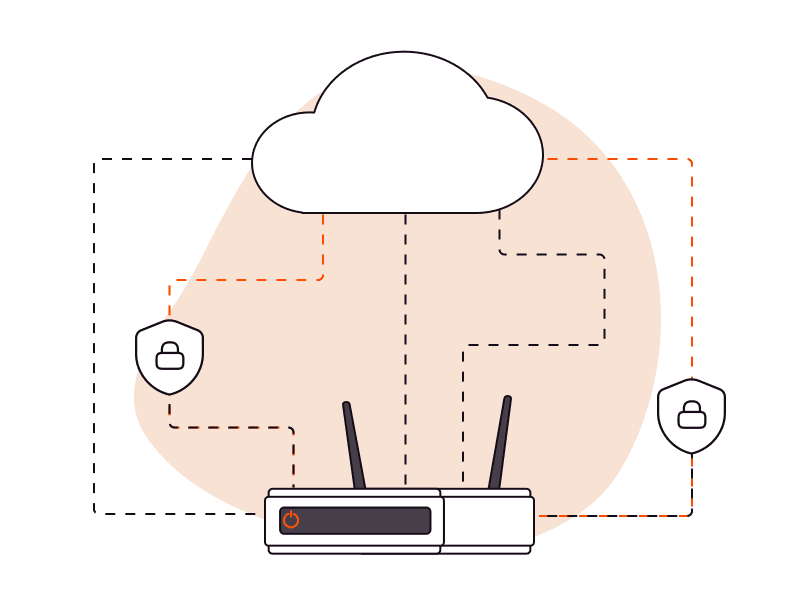
Edge compute for video delivery with FastEdge
FastEdge extends the CDN with programmable logic at the edge. This is where a video team can move entitlement and request handling closer to the viewer instead of sending every decision back to origin.
- Authentication: Validate JWTs, signed parameters, or custom entitlement data before content is served from cache or requested from origin.
- Smart routing: Rewrite URLs, headers, cookies, or query parameters to support tenant routing, custom auth flows, A or B delivery logic, or migration between origins.
- Request/response manipulation: Intercept request headers and body, as well as response headers and body, when you need custom policy or transformation logic around delivery.
- Advanced geo, time-based, or business-specific rules: Enforce advanced geo, time-based, or business-specific rules that go beyond standard CDN settings.
- Manifest manipulation: Rewrite HLS/DASH manifests on-the-fly for ad insertion markers, quality ladder filtering based on device capabilities, or DRM policy injection without origin involvement

Video-specific CDN capabilities that matter in practice

Low-latency live delivery paths
Support for HLS, LL-HLS, MPEG-DASH, and low-latency patterns for live playback quality. Gcore streaming stack can tune LL-HLS to ~3 seconds and LL-DASH to ~2 seconds.
Large-file and byte-range optimization
Gcore fetches content from origin in 10 MB ranges and assembles the response at the edge, especially useful for progressive MP4 delivery and seeking.
Origin shielding for expensive or distant storage
Shielding reduces duplicate requests against storage and packagers, which matters for globally distributed audiences, large catalogs, and origins with costly or sensitive request paths.
Origin groups for continuity
Use active-active or backup origin patterns to keep delivery stable when a region, storage system, or primary origin path degrades.
Prefetch and purge for release events
Warm the cache before a premiere and purge quickly after urgent updates so editorial, operations, and product teams can control rollout behavior without waiting for cache decay.
Reports, logs, and Grafana-level visibility
Track bandwidth, request rate, hit ratio, request time, and upstream behavior so video operations can tune cost, delivery quality, and incident response with more precision.
FAQ
What is a video CDN?
Video CDN is a globally distributed server network that caches and delivers video closer to viewers. It reduces buffering, scales to millions of concurrent streams, and supports adaptive bitrate protocols like HLS and DASH for smooth live and VOD playback.
When is CDN necessary if I already have a streaming workflow?
It becomes necessary when delivery itself becomes a product concern: live scale, global fan-out, lower latency, branded delivery domains, access policy, or origin protection. If your team already produces playback-ready HLS or MPEG-DASH, CDN is the layer that makes those streams perform in production.
What is the difference between CDN and transcoding?
Transcoding creates renditions and delivery formats from source media. CDN distributes those prepared outputs close to viewers, reduces pressure on origin, and enforces delivery policy such as tokens, geo rules, and edge logic.
What can FastEdge do for video delivery?
FastEdge can validate tokens, rewrite requests, manipulate headers or cookies, enforce custom access rules, and route traffic differently before the request reaches cache or origin. It is useful when entitlement and routing logic should run at the edge instead of inside the video backend.
Which broader CDN capabilities are especially useful for video teams?
The most relevant ones are origin groups, origin shielding, purge and prefetch, logs and reports, and FastEdge. These features help with resilience, release control, observability, and advanced policy for both live and VOD workloads.
How do I implement multi-CDN routing between Gcore and existing providers?
Share traffic among your CDN providers to keep high performance and reliability. Deploy Gcore as separate CDN resource with unique CNAME. Use DNS-based routing to distribute traffic by geography, latency, or failover rules. Application-layer routing uses manifest rewriting to steer clients between CDNs based on IP geolocation, subscription tier, or A/B testing cohorts.
Does Video CDN (CDN-only) replace Gcore transcoding or the full streaming platform?
No. CDN-only is the right path when you already own encoding and packaging. Use the full streaming platform when you want Gcore to handle ingest, transcoding, recording, storage, and playback workflows as a managed service.
Keep your video stack and upgrade the delivery layer
Use Gcore CDN to push low-latency live streams further, protect origins under load, apply stronger delivery policy, and add programmable edge logic without rebuilding the rest of your media platform.