



What Is an Origin Server?
- December 15, 2025
- 10 min read
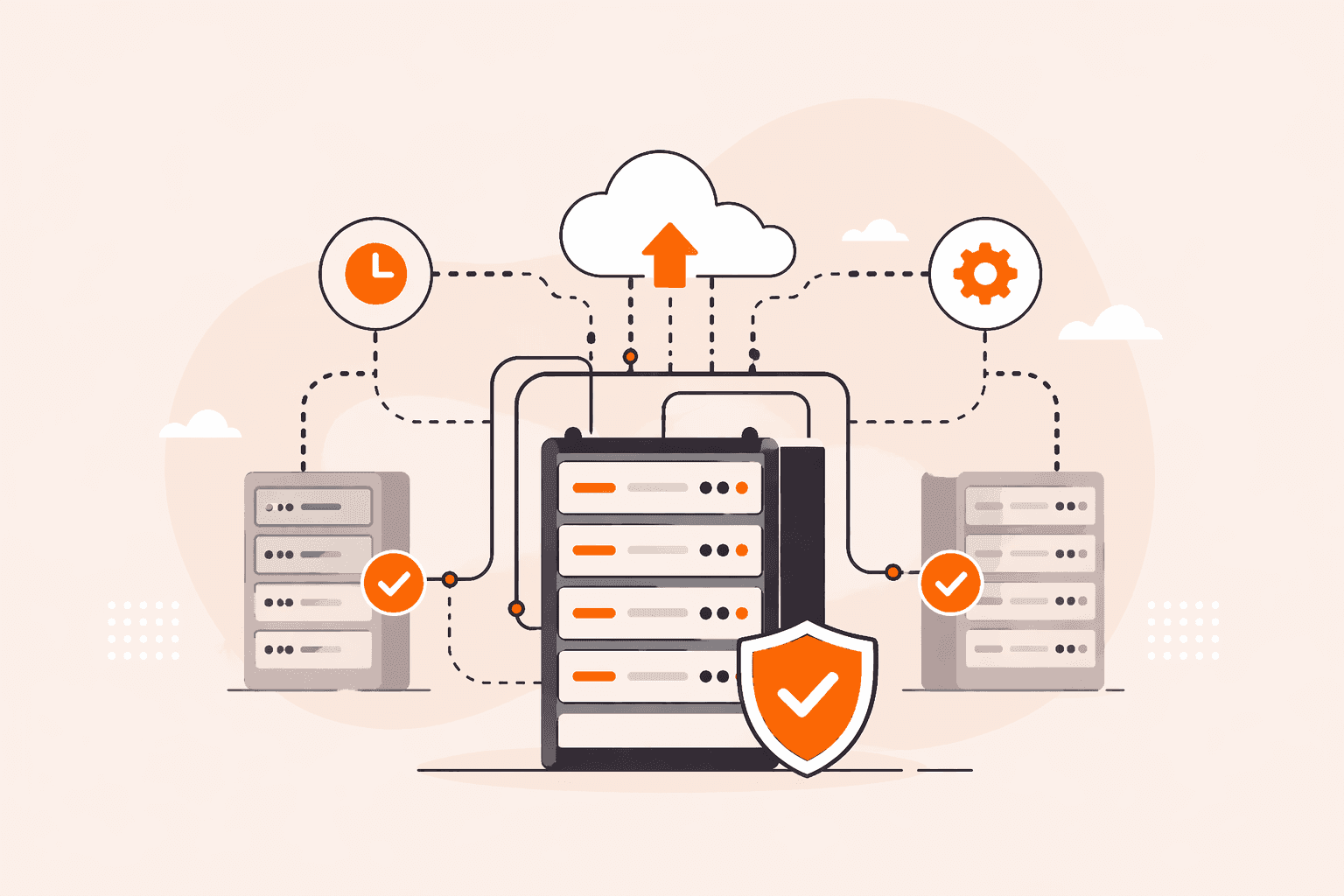
An origin server is a computer or service that stores and delivers original content to end-users, serving as the primary source for websites and web applications. When a user requests content, the origin server processes the request and sends back the data (HTML files, images, videos, or other digital assets).
The functionality of an origin server centers on processing and responding to incoming Internet requests. Each time someone visits a website, their browser sends a request to the origin server. The server retrieves the requested content from its storage and sends it back through the network.
This direct connection works well for smaller audiences. But it creates performance issues as traffic grows.
Distance between the origin server and end-users directly affects performance. Geographic separation introduces latency that slows page load times. Users farther from the server experience longer wait times. Security adds another layer of delay. SSL/TLS handshakes can add 100-500 ms of latency to each connection as the server and client establish a secure communication channel.
Origin servers work with Content Delivery Networks (CDNs) to reduce these performance issues by caching content on edge servers closer to users.
When set up properly, this pairing can reduce latency by up to 73% and improve page load times by 44%. The origin server configuration includes settings for caching rules, security protocols, backup procedures, and how the server responds to different types of requests.
Understanding origin servers matters because they're the foundation of web content delivery. Every piece of content your users see starts at an origin server. How you configure and manage it directly affects your site's speed, reliability, and security.
What is an origin server?
An origin server is the primary computer or service that stores and delivers the original content for your website or web application to end users. It processes incoming internet requests and serves as the main source of all content before it's distributed through a CDN.
The physical distance between your origin server and your users directly impacts page load times. SSL/TLS security handshakes alone can add 100-500 ms of latency. CDNs reduce this delay by caching your content on edge servers positioned closer to users, which can cut latency by up to 73% and improve page load times by 44%.
How does an origin server work?
An origin server stores the original versions of your website's files and responds to requests from users or CDN edge servers. When someone visits your website, their browser sends a request that either goes directly to the origin server or first hits a CDN edge server. If the requested content is not cached or the cache has expired, the edge server fetches a fresh copy from the origin.
The origin server processes each incoming request by locating the requested file, applying any necessary server-side logic, and sending the content back through the network.
It handles dynamic content generation, database queries, and user authentication. The server also sets cache rules that tell CDNs how long to store different types of content before requesting fresh copies.
Distance between the origin server and end users creates latency. This affects load times. SSL/TLS handshakes add 100–500ms of latency to establish secure connections.
Additional read: What is a CDN?
CDNs reduce this impact by caching static content on edge servers closer to users, which can improve page load times by 44%. The origin server continues to serve as the authoritative source, but it only needs to respond when cached content expires or when users request dynamic, personalized content that can't be cached.
What are the key components of origin server configuration?
Key components of origin server configuration refer to the essential elements and settings that determine how an origin server stores, processes, and delivers content to end-users. The key components of origin server configuration are listed below.
- Web server software: the application layer that processes HTTP requests and manages content delivery. Within the Gcore ecosystem, this typically involves using Gcore Cloud Compute instances to deploy your preferred web server stack or Gcore Managed Kubernetes for containerized application delivery, both of which give you the flexibility to choose and configure the server software that best fits your architecture.
- Operating system: the underlying platform that runs the server environment. Common choices are Linux distributions (Ubuntu, CentOS) and Windows Server.
- Storage system: the physical or virtual storage where your original content files live. Storage must handle read/write operations efficiently while maintaining data integrity and supporting backup requirements.
- Network configuration and connectivity: the bandwidth and routing configuration that connects your origin server to the internet and CDN edge servers. It controls how traffic reaches your origin, including IP address (public or private), DNS configuration, ports (80 or 443). Your network setup directly impacts content delivery speed and reliability.
- Security protocols and configuration: SSL/TLS certificates and encryption settings that protect data in transit between servers and users. These protocols add 100–500 ms of latency during the handshake process, but they're necessary for secure connections as they enable secure HTTPS communication between the CDN and origin. Security configuration includes firewalls/allowlists, rate limiting, authentication tokens or custom headers and restricted access to CDN IP ranges.
- Caching policies: rules that define which content can be cached, for how long, and under what conditions. Proper cache configuration reduces origin server load and improves response times.
- Load balancing: distribution mechanisms that spread incoming requests across multiple servers to prevent overload. Load balancers maintain performance during traffic spikes and provide failover protection. Read here more about our CDN load balancer.
- Resource allocation: CPU, RAM, disk I/O, and bandwidth limits assigned to handle concurrent requests and data processing. Proper resource allocation prevents bottlenecks and maintains consistent performance under varying loads.
- Monitoring & logging tools: tracks health and performance with information like uptime monitoring, error logs, access logs and metrics (CPU, memory, bandwidth).
How to add and configure an origin server?
You add and configure an origin server by setting up the primary content source, connecting it to your infrastructure, and defining how it handles incoming requests.
- Choose your origin server type based on your content delivery needs. You can select a dedicated server for full control over resources, a cloud-based instance for scalability, or your existing web server if it meets performance requirements. Make sure the server has enough storage capacity and bandwidth to handle your expected traffic volume.
- Install and configure your web server software like Apache, Nginx, or IIS. Set the document root directory where your content files will live. Configure port settings (typically port 80 for HTTP and 443 for HTTPS). Adjust timeout values to prevent connection drops during content delivery.
- Secure your origin server by installing an SSL/TLS certificate and enabling HTTPS. Configure firewall rules to allow access only from the CDN IP ranges or other trusted sources. This prevents unauthorized direct access to your origin and protects against DDoS attacks.
- Organize your content structure on the origin server with clear directory paths. Place static assets like images, CSS, and JavaScript files in dedicated folders. Set appropriate cache headers for each content type to control how long CDN edge servers store your files.
- Configure your origin server's response headers to include cache-control directives, CORS policies if serving cross-domain requests, and compression settings. Enable Gzip or Brotli compression to reduce file sizes by 50–70% before transmission to edge servers.
- Set up health checks and monitoring on your origin server to track uptime, response times, and error rates. Configure automatic alerts when response times exceed 200ms or when error rates spike above 1%. This lets you address issues before they affect users.
- Connect your origin server to your CDN by entering the origin hostname or IP address in your CDN configuration panel. Define the origin protocol (HTTP or HTTPS), set the origin port, and specify any custom headers that your origin requires for authentication or routing.
Test your configuration by requesting content through your CDN and verifying that files load correctly with proper cache headers. Monitor your origin server's CPU and bandwidth usage during the first 24 hours to confirm it handles the load efficiently.
How to manage and optimize origin server performance?
You can manage and optimize origin server performance by implementing caching strategies, monitoring server health, configuring efficient resource allocation, and reducing network latency through proper infrastructure setup.
- Start with a multi-layer caching strategy that stores frequently accessed content in memory and reduces database queries. This approach speeds up content delivery and reduces server load.
- Configure cache expiration rules based on content type. Set static assets like images to cache for 30 days. Dynamic content should refresh every 5-10 minutes to balance performance with freshness.
- Track key metrics like CPU usage, memory consumption, disk I/O, and network throughput. Continuous monitoring helps you spot issues before they affect users.
- Set up alerts when CPU exceeds 80% or response times cross 200ms. These thresholds give you time to address bottlenecks proactively.
- Use gzip or Brotli compression to reduce file sizes by 60-80% for text-based files. Smaller files mean faster delivery and lower bandwidth costs.
- Enable HTTP/2 to allow multiple concurrent requests over a single connection. This cuts page load times by 20-30% compared to HTTP/1.1.
- Distribute traffic across multiple origin servers to prevent any single server from becoming overwhelmed. Load balancing improves reliability and performance.
- Configure health checks every 30 seconds to automatically route traffic away from failing servers. This keeps your service running smoothly even when individual servers have issues.
- Configure database connections with connection pooling to handle 50-100 simultaneous connections efficiently. Connection pooling reduces overhead and improves response times.
- Index frequently queried database fields and run query optimization. These steps can reduce database response times from seconds to milliseconds.
- Set up proper SSL/TLS certificate management with session resumption enabled. This reduces the 100-500ms handshake overhead on repeat connections. Use modern TLS 1.3 protocols that complete handshakes faster than older versions. TLS 1.3 improves both security and performance.
- Place your origin servers in geographic locations close to your primary user base. Alternatively, work with a CDN to cache content on edge servers near your users. This approach can reduce latency by up to 73% compared to serving all content from a single distant origin. Lower latency means faster page loads and better user experience.
- Test your changes under realistic load conditions using stress testing tools before deploying to production. This helps you catch issues in a controlled environment.
- Keep detailed performance logs to identify trends over time. These logs help you understand what's working and where you need to improve.
What are the common origin server challenges and solutions?
Common origin server challenges refer to the technical and performance issues that arise when managing the primary content source for websites and web applications. Here are the most common origin server challenges and their solutions.
High latency: the physical distance between end users and your origin server increases round-trip time, resulting in slower content delivery. SSL/TLS handshakes add an additional 100–500 ms of delay for each new connection.
Solutions:
- Use a CDN to cache content at edge locations close to users.
- Reduce handshake overhead using TLS 1.3 and session reuse.
- Enable keep-alive connections to limit repeated handshakes.
- Optimize origin network routing and reduce cross-region hops.
Bandwidth overload: traffic spikes, large file requests, or high request volume can exceed the origin’s available bandwidth. This causes congestion, slower responses, or increased hosting costs.
Solutions:
- Cache static and semi-static content at the CDN edge.
- Use cache rules and long TTLs to reduce origin hits.
- Offload large files (images, video, downloads) to object storage.
- Monitor bandwidth usage and scale origin resources proactively.
Security vulnerabilities: origin servers face constant threats from DDoS attacks, SQL injection, and unauthorized access attempts. Exposed origin IP addresses make your servers easy targets.
Solutions:
- Hide the origin behind a CDN or reverse proxy.
- Implement a Web Application Firewall (WAF) to block malicious traffic.
- Allowlist only CDN IP ranges for origin access.
- Enforce HTTPS, strong TLS versions, and strict authentication policies.
Downtime risks: hardware failures, software bugs, or maintenance windows can make content unavailable. A single point of failure means complete service disruption.
Solutions:
- Deploy redundant origins across multiple regions.
- Configure automatic failover to switch traffic instantly when issues occur.
- Use health checks to detect origin outages in real time.
- Implement active-active or active-passive load balancing strategies.
Slow database queries: complex or inefficient database operations on the origin server delay content generation and delivery.
Solutions:
- Optimize slow or inefficient queries.
- Use database caching (Redis, Memcached) to store frequent results.
- Add read replicas to distribute query load.
- Implement indexing, connection pooling, and query profiling.
Configuration complexity: managing SSL certificates, DNS settings, firewalls, and server software requires technical expertise.
Solutions:
- Use managed hosting, managed databases, or managed SSL services.
- Automate configuration, updates, and monitoring where possible.
- Implement infrastructure-as-code for consistency.
- Standardize configuration templates and follow best-practice guidelines.
Origin Downtime: if the origin goes offline, the CDN can't fetch fresh content.
Solutions:
- Configure failover origins or backup origins.
- Enable health checks and monitoring.
- Use “serve stale content” if origin is unreachable.
- Implement auto-restart or auto-scaling mechanisms.
How to remove or replace an origin server?
Switching to a new origin server means updating your CDN configuration to point to the new address and testing everything before you move traffic over.
- Prepare your new origin server. Install required software, configure security settings, and upload all content. Test the server independently to confirm it responds correctly before connecting it to your CDN.
- Access your CDN control panel and find the origin server settings. This section shows your current origin server's IP address or domain name and lets you modify connection parameters.
- Update the origin server address by entering your new server's IP or domain name. If you're replacing an existing server, edit the current entry. If you're adding a secondary origin, create a new entry alongside the existing one.
- Configure connection settings including port number (typically 80 for HTTP or 443 for HTTPS), protocol type, and any custom headers your new origin requires. Set timeout values between 30-60 seconds to prevent connection failures during high traffic.
- Test the new configuration using your CDN's validation tool or by accessing a test URL through the CDN network. Check response times and verify content loads correctly from the new origin before proceeding.
- After successful testing, update your origin failover settings if you're keeping the old server as backup. Configure health checks to monitor the new origin's availability every 30-60 seconds.
- Finally, clear your CDN cache to remove content served from the old origin. This forces the CDN to fetch fresh content from your new origin and prevents users from seeing outdated files.
Monitor your CDN logs for the first 24-48 hours after switching to catch any connection errors or performance issues early.
Frequently asked questions
What is the difference between an origin server and a web server?
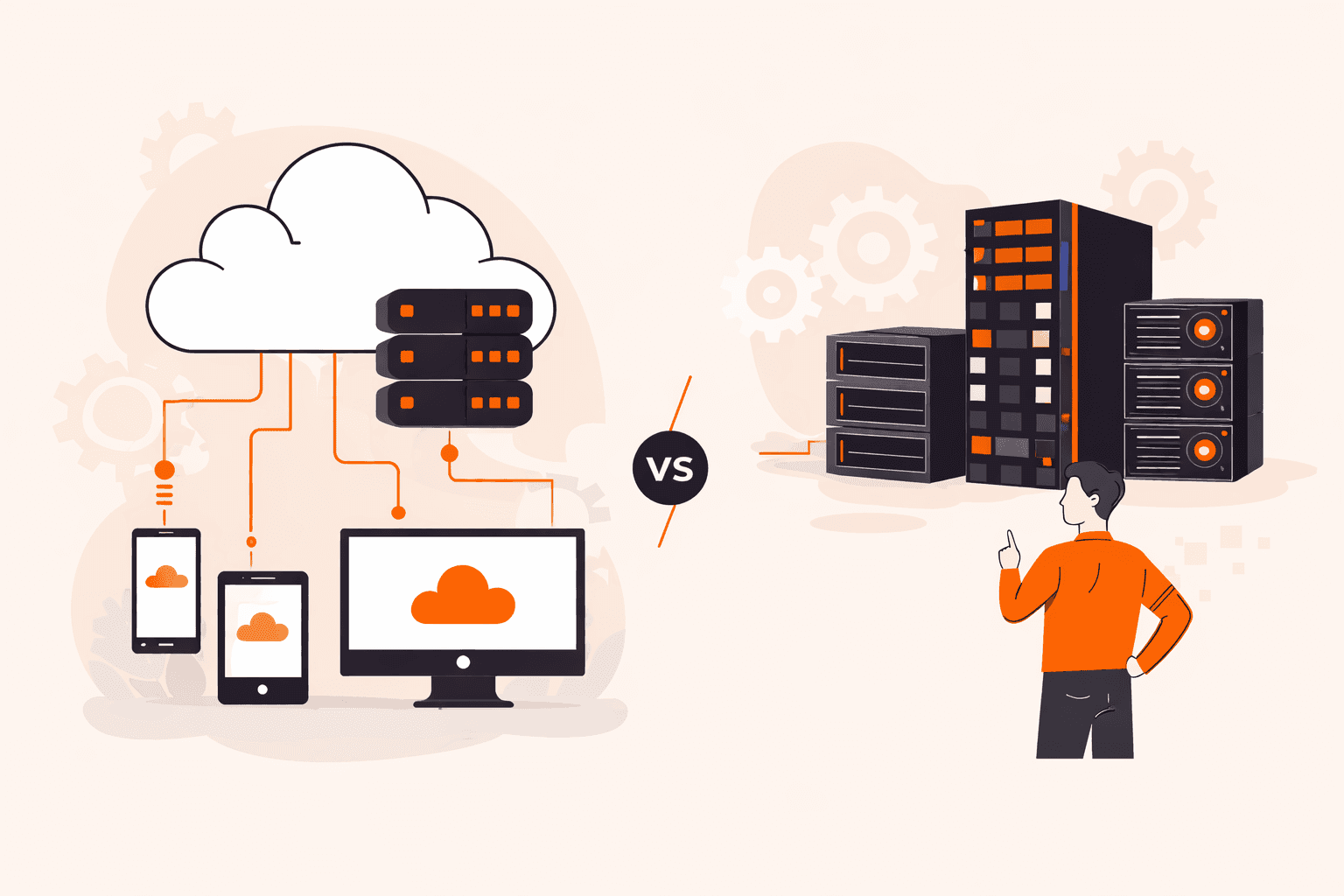
An origin server is the primary source that stores and delivers original content. A web server is the software or hardware that processes HTTP requests and serves web content. When a web server hosts your site or application, it can operate as an origin server. The two terms often overlap because many origin servers use web server software such as Apache or Nginx to handle requests and deliver files. However, not all origin servers are web servers—object storage, APIs, or application platforms can also act as origins.
Can I use multiple origin servers with a CDN?
Yes, CDNs support multiple origin servers for redundancy, load balancing, and failover, as well as for separating static and dynamic content across origins optimized for each workload like video streaming, API responses, or files such as images. This approach improves reliability and performance.
How does origin shielding protect my origin server?
Origin shielding protects your origin server by adding an intermediate caching layer between edge servers and your origin. This setup reduces direct requests often by 70-90% depending on your traffic and cache settings, which prevents traffic spikes from overwhelming your infrastructure.
What happens when an origin server goes down?
When your origin server goes down, the CDN can continue serving cached content to users as long as it remains available in the cache. However, the CDN cannot fetch new files or refresh expired content until the origin is back online. What users experience depends on your cache behavior and failover setup: they may receive stale content, be routed to a backup origin, or see error responses if no cached version is available.
How do I secure my origin server from direct access?
You can secure your origin server from direct access by configuring firewall rules to accept traffic only from your CDN’s IP ranges and block all other requests. This ensures users can reach your content only through the CDN, preventing direct attacks, bypasses, or unauthorized access.
What are the bandwidth requirements for an origin server?
Your origin server needs enough bandwidth to handle peak traffic and serve content to CDN edge servers during cache refreshes. Small sites typically need around 10 Mbps, while high-traffic platforms can require 10 Gbps or more.
Your actual bandwidth requirement depends on four key factors: content size, traffic volume, cache hit ratio, and how often your cached content expires or is purged. Higher cache efficiency means lower bandwidth demand on your origin.
Can I use cloud storage as an origin server?
Yes, cloud storage can work as an origin server. It can store your content and respond to CDN requests in the same way a traditional web server does. Most cloud storage platforms provide public or authenticated endpoints that a CDN can pull from.
To use it as an origin, you need to configure your CDN to pull content from the cloud storage endpoint. The setup is straightforward, and most cloud storage services provide API endpoints specifically designed for this purpose.

Related articles
Subscribe to our newsletter
Get the latest industry trends, exclusive insights, and Gcore updates delivered straight to your inbox.