



Serverless vs Containers: Key Differences, Use Cases, and Costs
- December 18, 2025
- 7 min read
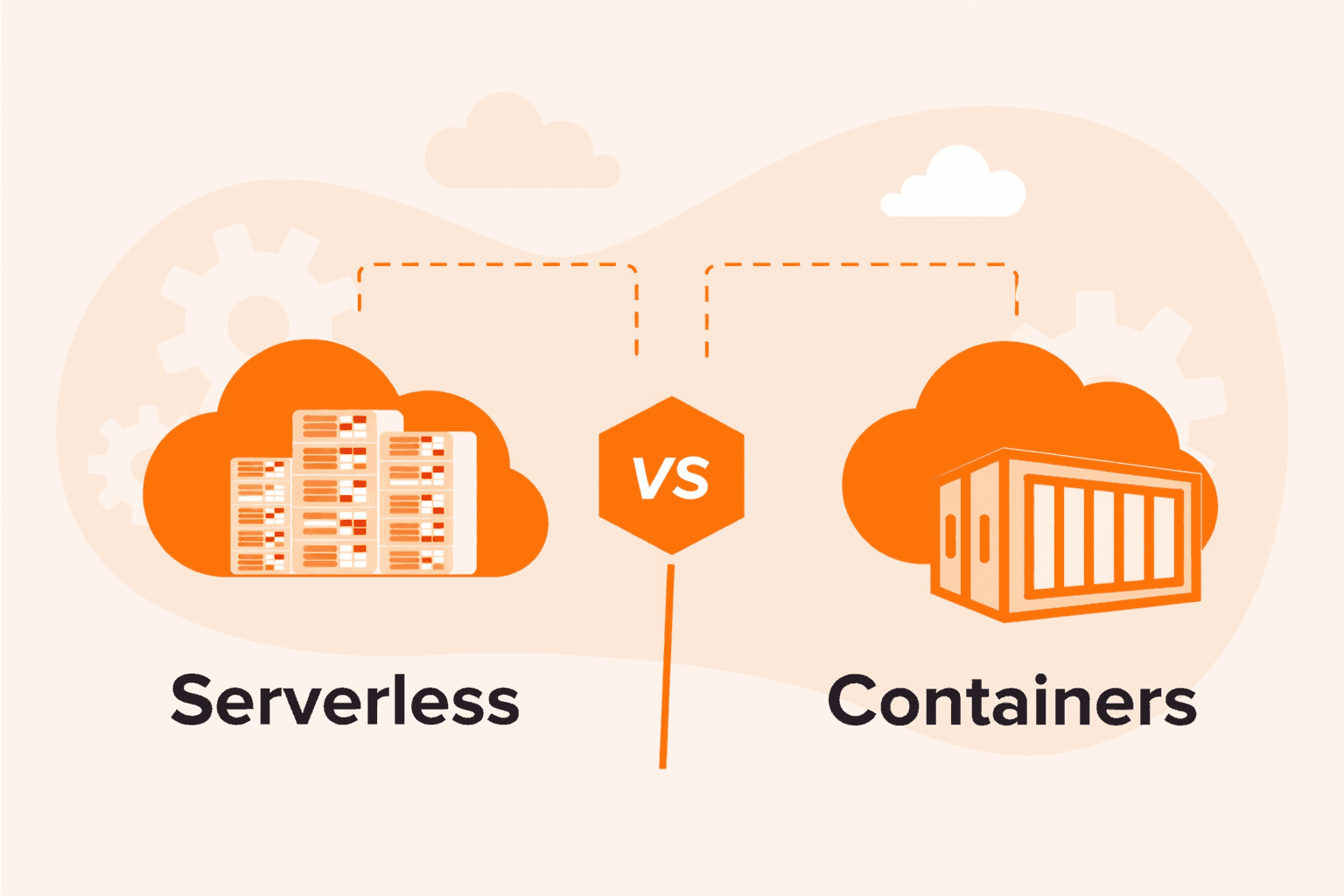
Building modern applications means making a fundamental choice: serverless or containers?
This decision affects how you use code, manage resources, and pay for infrastructure. Here's what you need to know.
Serverless computing lets you write code without managing servers. You upload your function, and the cloud provider handles everything else: growing, execution, and resource allocation. Traffic spikes? More instances spin up automatically. Things quiet down? You don't pay for idle servers.
Think of it as an infinitely flexible execution environment that bills you only for the milliseconds your code actually runs.
Containers package your application with all its dependencies into a portable unit that runs consistently anywhere. You get more control over the runtime environment, but you also handle more infrastructure decisions. A Container as a Service platform can simplify deployment while maintaining that flexibility.
Containers share the host operating system kernel. This means you can run many more containers on a single machine than you could with traditional virtual machines.
Both approaches solve the same core problem: they abstract away infrastructure complexity so you can focus on building features instead of managing servers. They both work well with microservices architectures, scale on demand, and fit naturally into DevOps workflows with continuous combination and use pipelines.
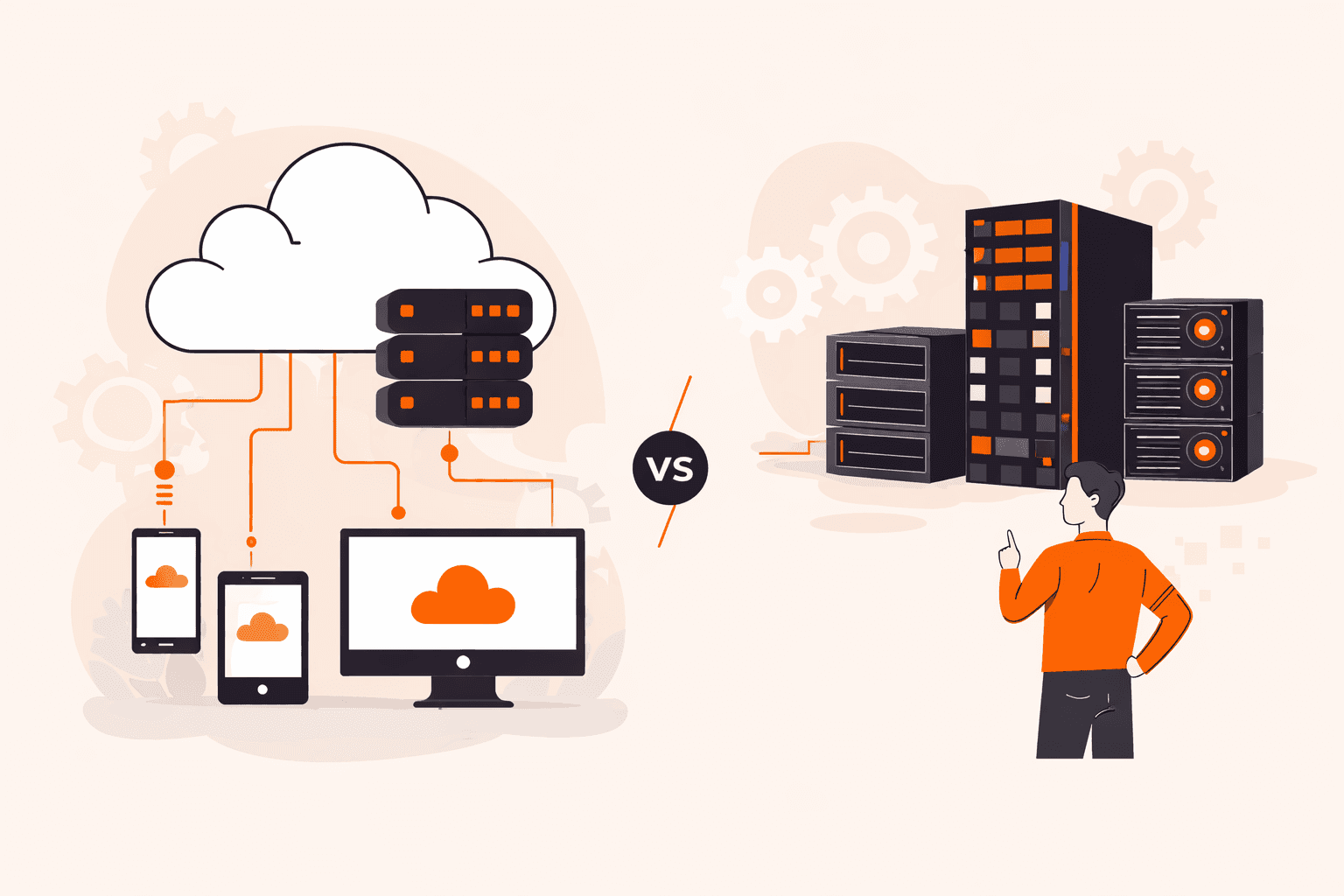
The real differences come down to control versus convenience.
Serverless gives you automatic growing and pay-per-execution billing. It's perfect for workloads with unpredictable traffic patterns.
Containers offer more flexibility and longer execution times. They're better for applications that need specific runtime configurations or run continuously.
Your choice depends on what your application needs and how much infrastructure management you want to handle.
What is serverless computing?
Serverless computing is a cloud-native development model where the cloud provider manages all server infrastructure. This serverless computing model lets developers focus solely on writing and using code without handling server provisioning, growing, or maintenance.
Here's how it works. The provider automatically allocates computing resources based on demand, executes code in response to events or requests, and charges only for actual compute time used rather than pre-allocated capacity.
This model removes operational overhead while providing instant growing from zero to thousands of requests. A Function as a Service solution is ideal for event-driven applications with unpredictable or variable workloads.
Additional reads | What is FaaS?
What are containers?
Containers are lightweight, portable software packages that bundle an application with everything it needs to run. This includes libraries, configuration files, and runtime environments, all packaged into a single unit that runs consistently across different computing environments.
Here's what makes containers effective: They share the host operating system's kernel instead of requiring a full OS for each instance. This shared-kernel architecture lets you run many more containers on the same hardware compared to VMs. Startup times are measured in milliseconds rather than minutes.
What are the similarities between serverless and containers?
Serverless and containers both abstract infrastructure management. They let developers focus on writing code rather than managing servers or provisioning resources. Both technologies support microservices architectures, scale to handle varying workloads, and work well with DevOps workflows with automated build, testing, and deployment pipelines. They share a cloud-native approach that reduces operational overhead compared to traditional virtual machines.
Both serverless and containers abstract infrastructure, but they differ in how portable they are across environments. Containerized applications are highly portable and can run consistently across development, testing, and production on different cloud platforms. Serverless functions make application code easier to move between environments, but often rely on cloud-specific triggers, services, and configurations. This means containers generally offer stronger protection against vendor lock-in, while serverless trades some portability for convenience and faster development.
The two technologies complement each other in modern application architectures. Containers can run serverless functions, and serverless platforms often use containers behind the scenes to execute code. Many teams combine both approaches, using serverless for event-driven tasks like API endpoints or data processing triggers, while running containers for stateful services or applications that need persistent connections. This hybrid model takes advantage of serverless's automatic growth for unpredictable traffic and containers' control for complex, long-running processes.
What are the key differences between serverless and containers?
Serverless and containers differ in how they handle infrastructure management, growing, execution, and cost structure. Here are the key differences.
- Infrastructure management: Serverless abstracts all server operations. The cloud provider handles provisioning, maintenance, and growing automatically. Containers require you to manage orchestration, growing policies, and underlying infrastructure, though tools like Kubernetes can automate some tasks.
- Growing behavior: Serverless scales automatically from zero to thousands of instances based on request volume. It's ideal for unpredictable workloads. Containers scale using configured orchestration and autoscaling rules. This gives teams more control over scaling behavior, but requires them to design, configure, and maintain those rules.
- Cold start latency: Serverless functions experience cold starts when idle, adding 50 to 500 milliseconds of latency as the provider initializes resources. Containers typically run as long-lived processes, avoiding per-request cold starts and providing more predictable response times.
- Execution model: Serverless runs stateless functions triggered by events. Each invocation is independent and short-lived. Containers support both stateless and stateful applications, running continuously and maintaining persistent connections.
- Cost structure: Serverless bills per request and execution time, charging only for actual compute used down to 100-millisecond increments. Containers charge for reserved resources regardless of usage. You pay for allocated CPU and memory even during idle periods.
- Resource control: Serverless limits memory allocation and execution duration, typically capping functions at 15 minutes and 10 GB of memory. Containers offer full control over CPU, memory, and storage configurations. They support long-running processes and custom resource allocation.
- Use complexity: Serverless simplifies deployment by abstracting most infrastructure concerns. Teams focus on application code and event triggers, while the platform handles provisioning and scaling. Containers require building images and configuring orchestration, which involves more setup but offers greater flexibility for complex dependencies and runtime control.
How does serverless compare to microservices?
Serverless and microservices aren't opposing architectures. They're complementary approaches that often work together. Serverless is an execution model where cloud providers manage infrastructure automatically, while microservices is an architectural pattern that breaks applications into independent services. You can use microservices using serverless functions, containers, or traditional servers.
The key difference lies in scope and use.
Microservices define how you structure your application into separate, loosely coupled services that communicate through APIs. Each microservice handles a specific business function and can scale independently. Serverless defines how code runs: as event-driven functions that execute on demand without server management, with automatic growing and pay-per-use billing.
Many modern applications combine both approaches.
You might build a microservices architecture where some services run as serverless functions while others run in containers. For example, an e-commerce platform could use serverless functions for order processing that spikes unpredictably, while running inventory management as a containerized microservice that needs consistent resources. This hybrid pattern lets you match each service to the right execution model based on its workload characteristics and performance requirements.
The choice depends on your specific needs.
Serverless functions work best for event-driven tasks with variable traffic. They offer zero management overhead. Microservices in containers give you more control over the runtime environment and avoid cold start delays, making them better for services with steady traffic or complex dependencies.
How do containers compare to virtual machines?
Containers offer a lighter, more effective approach to application use than virtual machines.
Both technologies isolate applications and abstract infrastructure, but their architectures differ mainly. VMs include a full operating system for each instance. Containers share the host OS kernel and package only the application and its dependencies.
This architectural difference has significant implications. Containers start in milliseconds versus minutes for VMs, use substantially less memory, and allow far higher density on the same hardware.
VMs provide stronger isolation because each runs its own OS. This makes them better for security-sensitive workloads or when you need to run different operating systems on the same hardware. Containers excel at microservices architectures where you need to use many lightweight instances quickly. You can run many more containers per host than VMs because they share the kernel rather than each needing dedicated OS resources.
The choice depends on your specific needs.
VMs work best when you need complete isolation, want to run multiple OS types, or have legacy applications requiring full system control. Containers shine for cloud-native applications, continuous use pipelines, and scenarios where resource effectiveness and fast startup matter most. Many organizations use both approaches, running containers inside VMs to combine the isolation benefits of VMs with the effectiveness of containers.
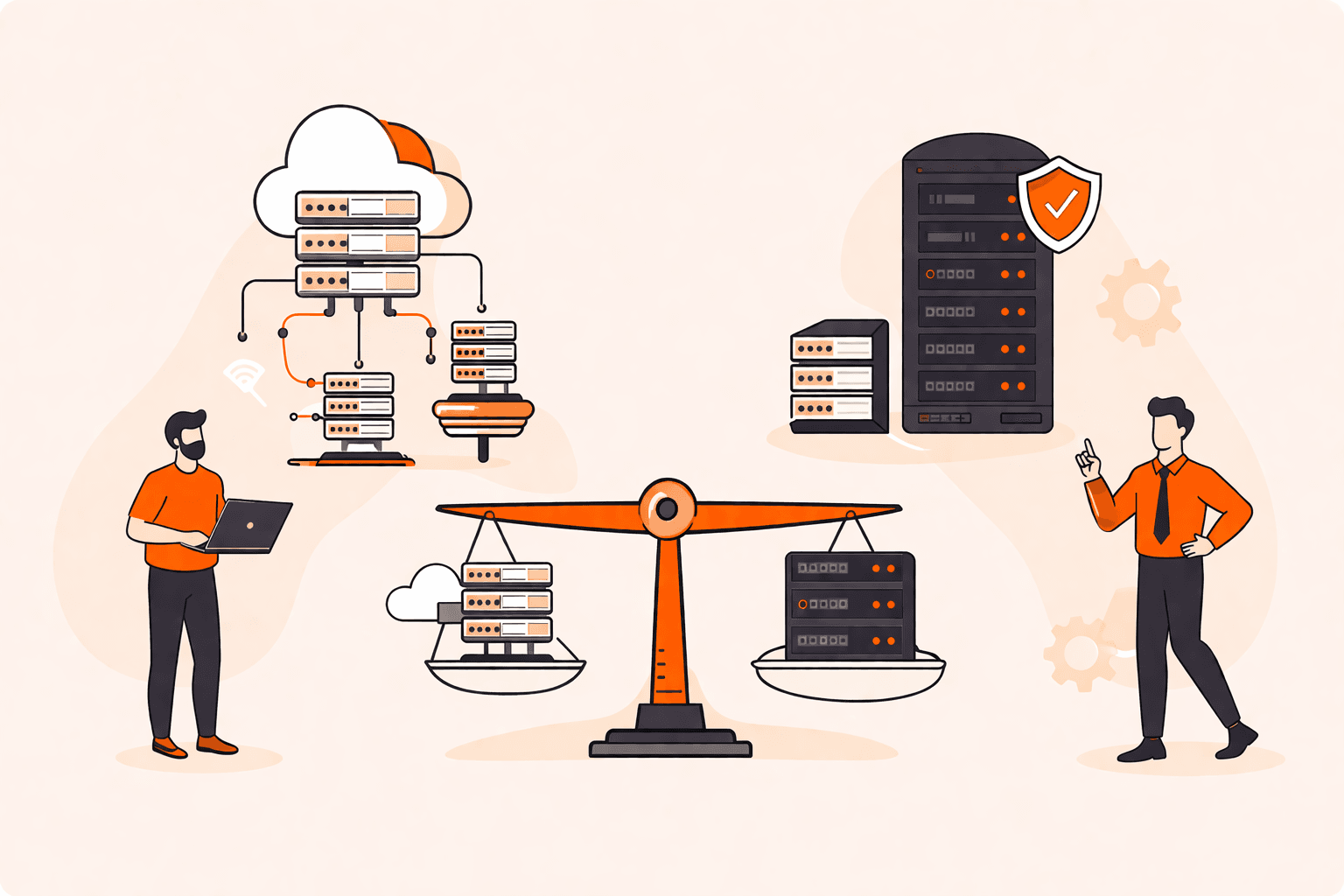
How to choose between serverless and containers
You choose between serverless and containers by evaluating your workload patterns, control requirements, performance needs, and operational preferences against each model's strengths.
Serverless works best for event-driven applications with unpredictable or sporadic traffic. Think REST APIs that scale from zero to thousands of requests during product launches. Containers excel at handling consistent workloads with steady demand, like data processing pipelines that run continuously throughout the day.
Containers give you complete control over dependencies, libraries, and system configurations. This makes them ideal for complex applications with specific requirements. Serverless abstracts away infrastructure management entirely, letting you focus purely on code while the provider handles growing and resource allocation.
Containers start in milliseconds and maintain consistent low latency because they stay running. This suits latency-sensitive applications perfectly. Serverless functions may experience cold starts when growing from zero, adding latency to initial requests but improving resource use during idle periods.
Serverless uses pay-per-execution billing. You're charged only when functions run, which can especially reduce costs for intermittent workloads. Containers require payment for reserved resources even during idle time but provide predictable costs for applications with constant demand.
Serverless needs minimal DevOps involvement because the provider manages servers, growing, and updates automatically. Containers require more management effort, especially when configuring a Kubernetes cluster and orchestration platforms, but offer greater flexibility for customization.
Serverless functions are stateless by design. They require external storage for data persistence between invocations. Containers can maintain state within the runtime, simplifying architecture for applications that need to keep data in memory across requests.
Both models support microservices architectures and combine well with CI/CD pipelines.
Containers offer more flexibility for legacy applications that need specific system-level dependencies or custom networking configurations.
Test both approaches with a proof-of-concept project before committing to one model. Many teams find success using a hybrid plan that deploys serverless functions for event handling alongside containers for stateful backend services.
How can Gcore help with serverless and container deployments?
Whether you're running event-driven functions or containerized microservices, Gcore Cloud delivers the infrastructure to support both models. Use Gcore Managed Kubernetes for container orchestration with built-in autoscaling, or deploy lightweight functions with our FastEdge serverless edge platform across 210+ global locations.
Both options include pay-as-you-go pricing and sub-30ms latency, so you're not paying for idle resources during quiet periods.
The platform delivers sub-30ms latency across 210+ global locations through edge computing infrastructure. You'll get consistent performance for both event-driven functions and containerized applications. Built-in auto-growing handles traffic spikes automatically, while pay-as-you-go pricing eliminates costs during idle periods.
Frequently asked questions
Is serverless vs containers difficult to implement?
No, both serverless and containers simplify use compared to traditional infrastructure, though each has different setup requirements.
Serverless requires minimal configuration. You write code, use functions, and the provider handles everything else automatically.
Containers need more initial setup. You'll package applications with dependencies and configure orchestration tools, but once established, use becomes straightforward and repeatable.
How much does serverless vs containers cost?
Serverless costs scale directly with usage through pay-per-execution pricing (typically $0.20 per million requests plus compute time). Containers incur fixed costs for running instances regardless of traffic, generally ranging from $10 to $200 per month per container depending on allocated resources.
Can serverless vs containers integrate with existing systems?
Yes, both serverless and containers combine smoothly with existing systems. They connect through APIs, message queues, and standard protocols like HTTP/REST, which makes them compatible with both legacy infrastructure and modern microservices architectures.
What are common mistakes with serverless vs containers?
Here are the most common pitfalls to watch for. Teams often choose serverless for long-running processes, which leads to high costs and timeouts. Containers get selected for sporadic workloads, wasting resources during idle periods. Cold starts can especially impact user-facing applications if you don't plan for them.
Orchestration complexity catches teams off guard too. Many expect Kubernetes to be as hands-off as serverless, but it requires active management. On the flip side, there's a persistent myth that serverless can't handle stateful operations. Modern serverless platforms support state through external services like databases and caches.
How long does it take to set up serverless vs containers?
Serverless functions can be deployed quickly with minimal infrastructure configuration..
Containers take minutes to hours, depending on orchestration complexity and whether you're building from scratch or using pre-built images. With serverless, you just upload code to your provider's platform. Containers require more work: you'll need to build images, configure orchestration tools, and set up networking before use.

Related articles
Subscribe to our newsletter
Get the latest industry trends, exclusive insights, and Gcore updates delivered straight to your inbox.