



How various audiences viewed the World Cup via Gcore
- July 22, 2026
- 4 min read

Gcore's content delivery network (CDN) was the backbone behind many broadcasters and live streams at the recent 2026 World Cup, and we observed some interesting stats on how tournament viewing habits differed across the five regions where we operated.
This article explores the differences in how audiences watched the games in the Middle East, Francophone Africa, Germany, Malaysia, and Latin America. It also provides some insight into the technology that powered it all behind the scenes.
One tournament, several prime times
A football match begins at the same moment everywhere. However, depending on the time zone (and, of course, which teams are playing), viewing demand can differ greatly.
Since this year's matches took place in the US, Mexico, and Canada and aligned with their standard waking hours, viewers across the world often had to watch games at unusual times, with regional traffic peaking at different local times.
For example, Latin America's peaks came during the evening after work (typically between 18:00 and 21:00). Francophone Africa peaked around 20:45. Germany's regional traffic peaked around 22:30 CEST, while the Middle East and North Africa reached peak audience later still, in the middle of the night. Matches played in the Americas could reach Malaysian viewers at around 11:30 UTC+8 the next morning.
These peaks did not necessarily correspond to the same fixture, with demand shifting between regions depending on which teams were playing and the stage of the tournament, meaning that sufficient capacity and 24/7 operational support were vital from beginning to end.
Viewing habits and devices
What's more, the method viewers used to watch the game also varied greatly across regions.
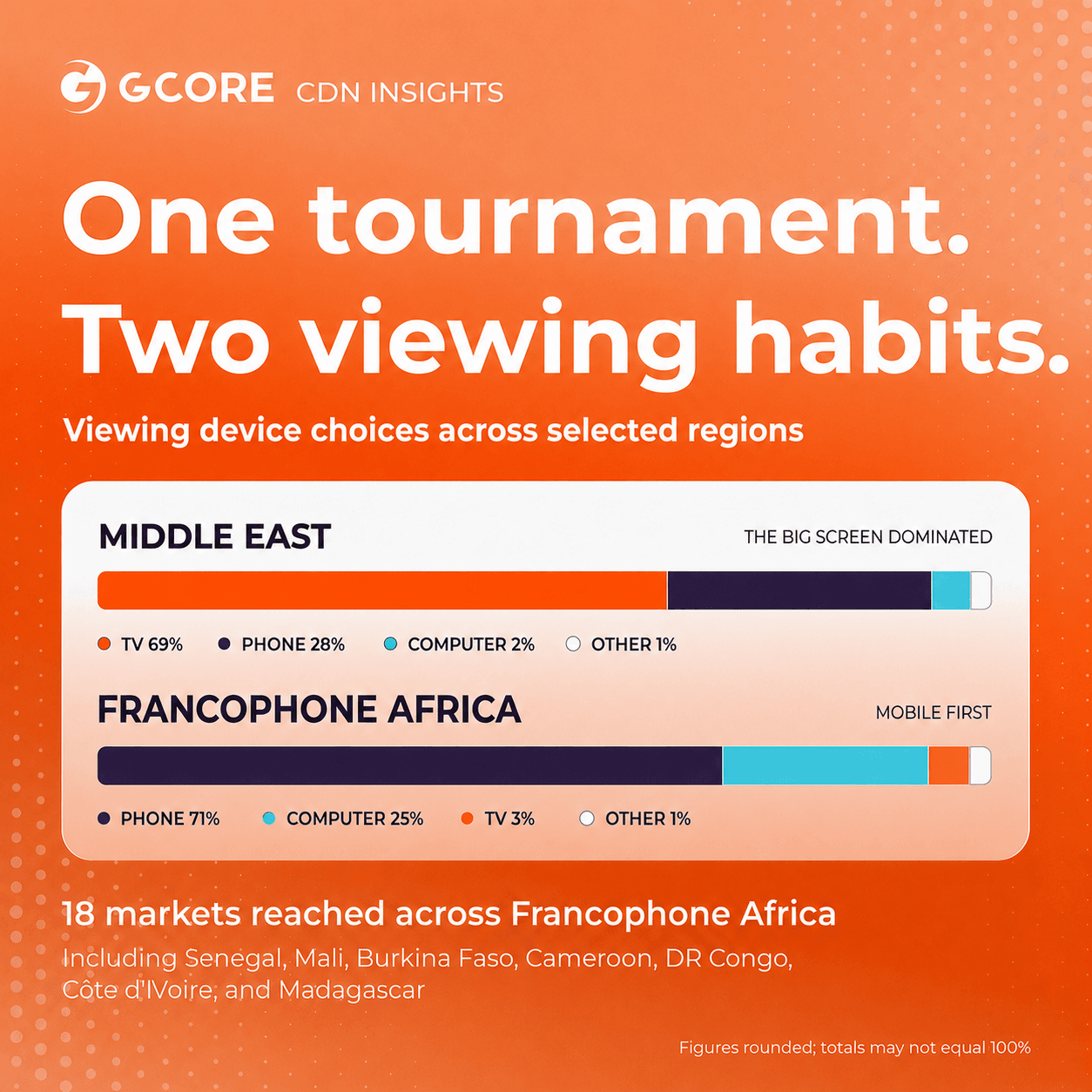
For example, in the Middle East, television dominated: 69% of viewing devices were TVs, against 28% phones and just 2% computers, big-screen viewing in the most literal sense.
Francophone Africa showed almost the reverse pattern, with phones accounting for 71% of viewing, computers 25%, and television only 3%.
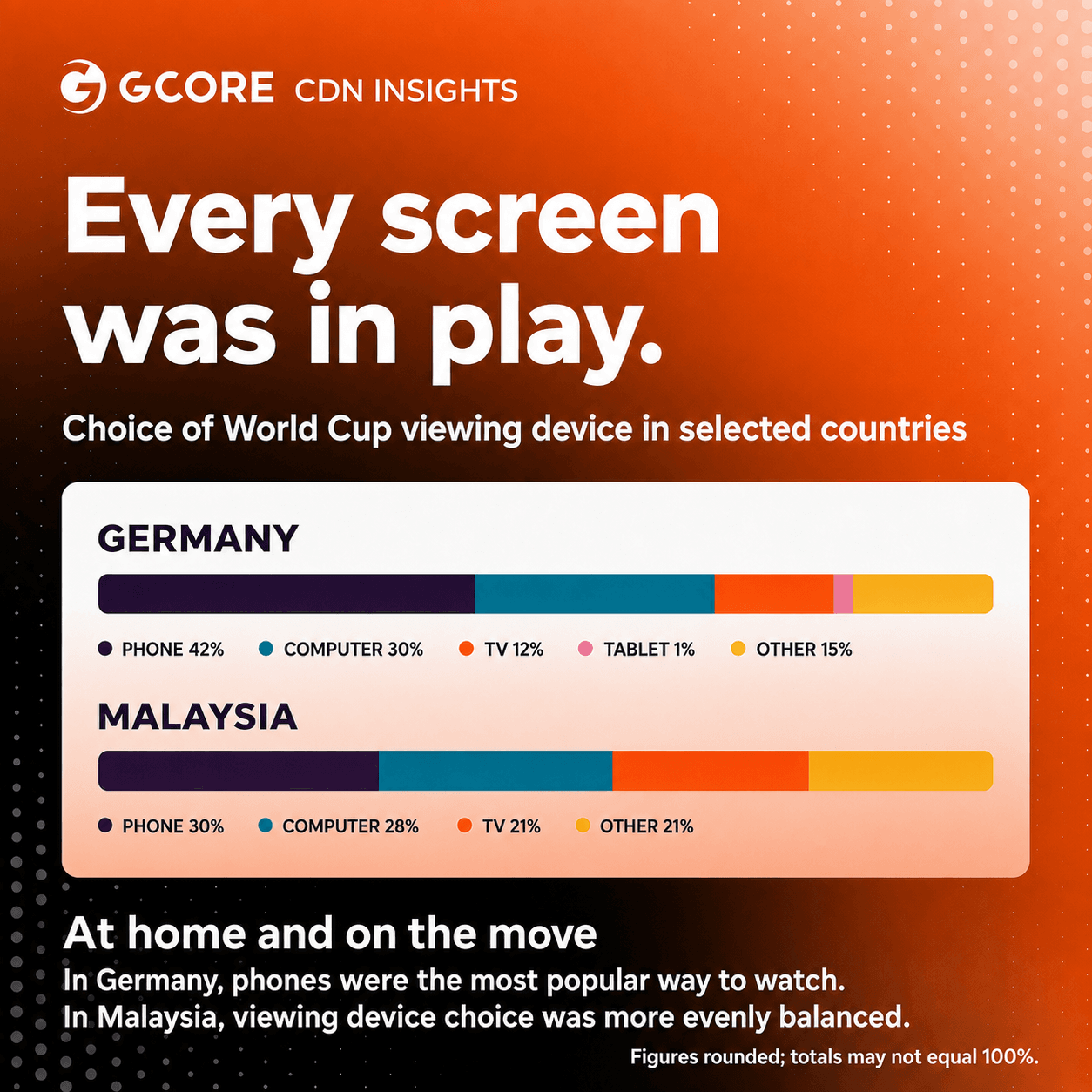
Germany had the most distributed device mix of any region: although phones were the most popular viewing method at 42%, followed by computers at 30%, other connected devices at 15%, television at 12%, and tablets at 1%. Overall, the tournament was followed across a range of devices that people already use at home and on the move.
Malaysia was more evenly distributed: phones represented 30% of viewing devices, computers 28%, televisions 21%, other connected devices 19%, and tablets 2%.
What the tournament showed
The world watched the same tournament. The way it was watched was different everywhere: televisions across the Gulf, phones across Francophone Africa, mixed devices in Germany and Malaysia, each creating its own traffic peaks and operational demands. For example, in Germany, Gcore's largest regional market during the tournament, traffic peaked above 3 Tbps during national prime time, with the largest share delivered through direct Deutsche Telekom connectivity.
Elsewhere, that meant supporting sports platforms across Latin America, a major streaming platform across the Middle East and North Africa, and national broadcasters in Malaysia and Francophone Africa — each with very different audiences and delivery needs.
Supporting those audiences required more than raw bandwidth. It required enough capacity to absorb regional surges whenever they arrived, low-latency delivery to keep viewers close to the action, edge-based access control, and engineering teams operating around the clock.
The delivery conditions also varied. A stream watched on a large television over fixed broadband in the Gulf Cooperation Council (GCC) also had to perform reliably on a phone across West and Central Africa, without requiring each platform to build a separate delivery stack for every market. This means that behind the scenes, the network had to be ready for weeks of unpredictable demand.
For such an emotional, once-every-four-years occasion, audiences need a seamless and reliable viewing experience.
Read on to learn more about the infrastructure that made it possible…
The technology behind the scenes
Delivering that experience, across five regions with very different viewing habits and peak times, was the same engineering challenge everywhere: keep live video reliable, keep viewers close to the live edge, and absorb traffic peaks that arrived at different hours around the world.
Gcore didn't publicize its role during the tournament, but the work happened behind the broadcasters and streaming platforms viewers already used: carrying live streams, absorbing sudden demand, validating access at the edge, and keeping services available throughout.
Reach means little if the stream fails when audience demand peaks. Across billions of requests measured for the approved reliability figure, 99.9998% completed without a server error. That corresponds to roughly one server error per 500,000 requests across the participating regions, rather than on a single isolated feed.
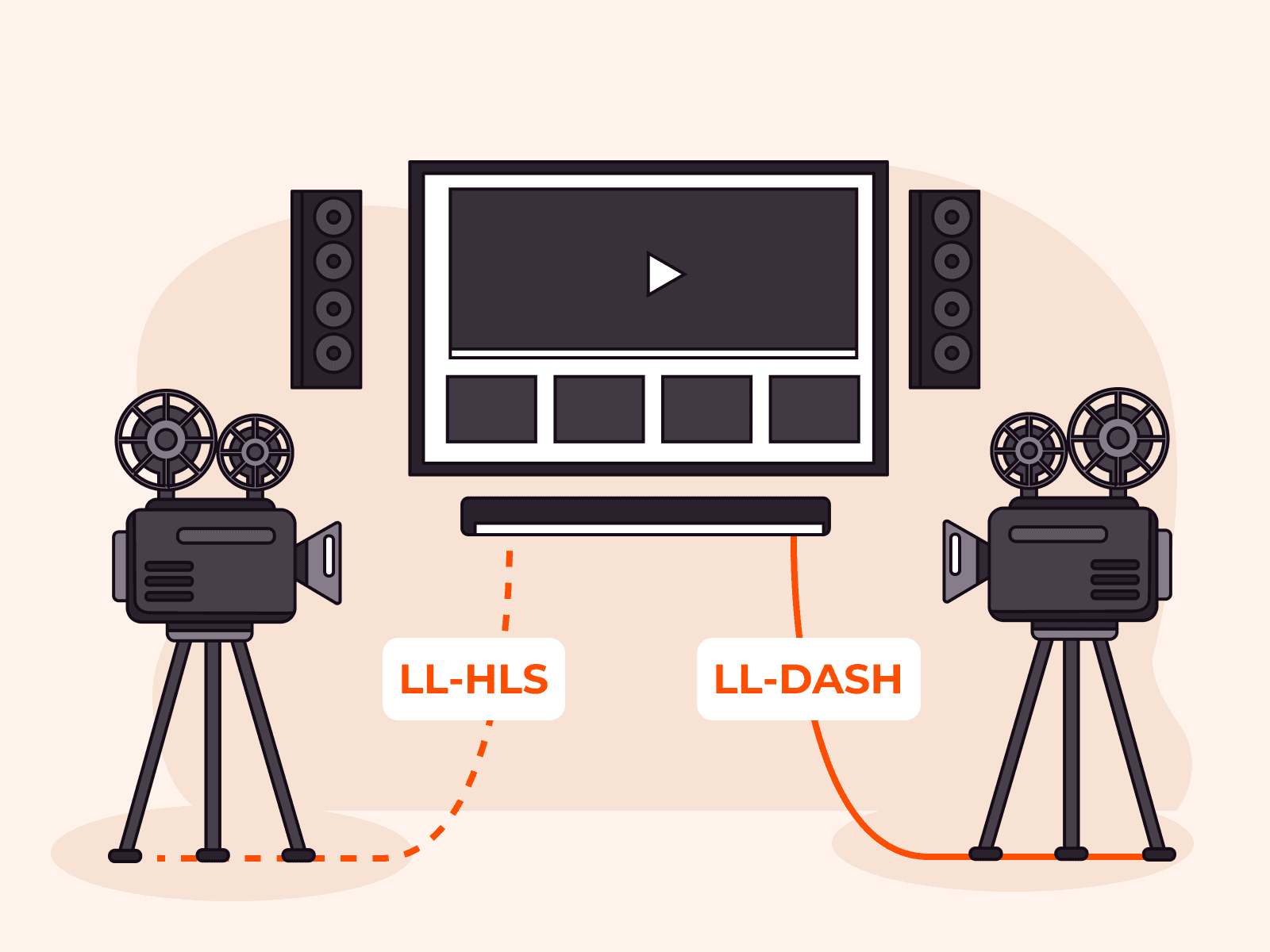
Live streaming also introduces constraints that on-demand systems never face. Viewers expect to stay close to the live action and for playback to recover cleanly when they pause, arrive late, or miss a goal. Gcore supported low-latency delivery using LL-HLS and LL-DASH, alongside catch-up and restart, keeping viewers close to the live edge while still letting them return to a moment they missed.
Delivering a major live broadcast also requires more than network capacity and speed. Streaming platforms have to protect accounts and premium content while remaining resilient against threats such as DDoS attacks, credential abuse, and stream piracy.
For services using token-based access control, a Gcore FastEdge application validated a signed token on every request and could revoke access immediately, ensuring that premium streams remained available to authorized viewers only. Because verification ran at the edge on the same infrastructure as the CDN, access decisions could be made close to the viewer. This reduced verification traffic reaching the customer's origin while supporting both security and playback performance.
Ready for the next tournament?
The 2026 World Cup showed what it takes to keep live sport online at a global scale: enough capacity for peaks that never land at the same time twice, low-latency delivery that keeps pace with the action, and security that holds up under real demand, not just on paper.
Delivering live streams at a global scale takes more than bandwidth. If you're planning coverage for a major live event, get in touch with Gcore to talk through CDN capacity, low-latency delivery, and edge security for your platform.

Related articles


For many startups, infrastructure decisions are mostly about performance, pricing, and developer experience. For Melious AI, they are also about trust.Melious AI is a German startup building a European AI platform around privacy, transparen

At Gcore, delivering exceptional streaming experiences to users across our global network is at the heart of what we do. We're excited to share how we're taking our CDN performance monitoring to new heights through our partnership with AVEQ
Subscribe to our newsletter
Get the latest industry trends, exclusive insights, and Gcore updates delivered straight to your inbox.