



Gclaw puts OpenClaw to work without the infrastructure setup
- August 27, 2026
- 4 min read
OpenClaw is an actively maintained open-source agent framework with an established community. Running an OpenClaw agent yourself, however, can mean configuring a server, connecting an inference provider, managing API keys, and maintaining the environment around it.
Gclaw removes much of that setup. It gives users a personal OpenClaw assistant running on a dedicated Gcore VM, with DeepSeek V4 Flash inference already connected (more on that later). Gcore's own engineers ran into many of the same setup problems while building internal OpenClaw-based tools, which is part of why the product exists.
Instead of creating another agent framework, Gclaw builds on OpenClaw and focuses on the infrastructure around it: provisioning and managing the VM, connecting inference, and giving the agent a persistent environment.
An assistant with its own environment
Gclaw is designed for work that continues beyond a single conversation. Each assistant runs in its own dedicated VM (virtual machine), with persistent memory, a saved workspace, managed inference, and support for OpenClaw skills and integrations.
That environment lets it retain context, work across multiple interactions, and run tasks that need files, tools, or an ongoing workspace, rather than starting fresh every time.
What Gclaw actually runs
OpenClaw itself already does the hard part: one gateway bridging Telegram, Discord, and other channels to an agent, with its own session memory and tool access. Gclaw adds the part that would otherwise require users to manage infrastructure themselves: a dedicated VM for each user, OpenClaw pre-installed, and inference already connected to a model running on Gcore's GPUs. The VM itself runs on EU-based infrastructure, giving users a clear European location for where their agent and its data are hosted.
That model is DeepSeek V4 Flash, an open-weight model DeepSeek released in April 2026. Gcore switched to DeepSeek V4 Flash in June 2026, shortly before Gclaw's paid launch, after the model performed best in the team's internal testing. The decision was driven primarily by performance rather than cost. Running an open-source model the team can host itself, rather than depending on someone else's API, is part of the product philosophy. It keeps the experience self-contained: one account, one VM, one inference stack.
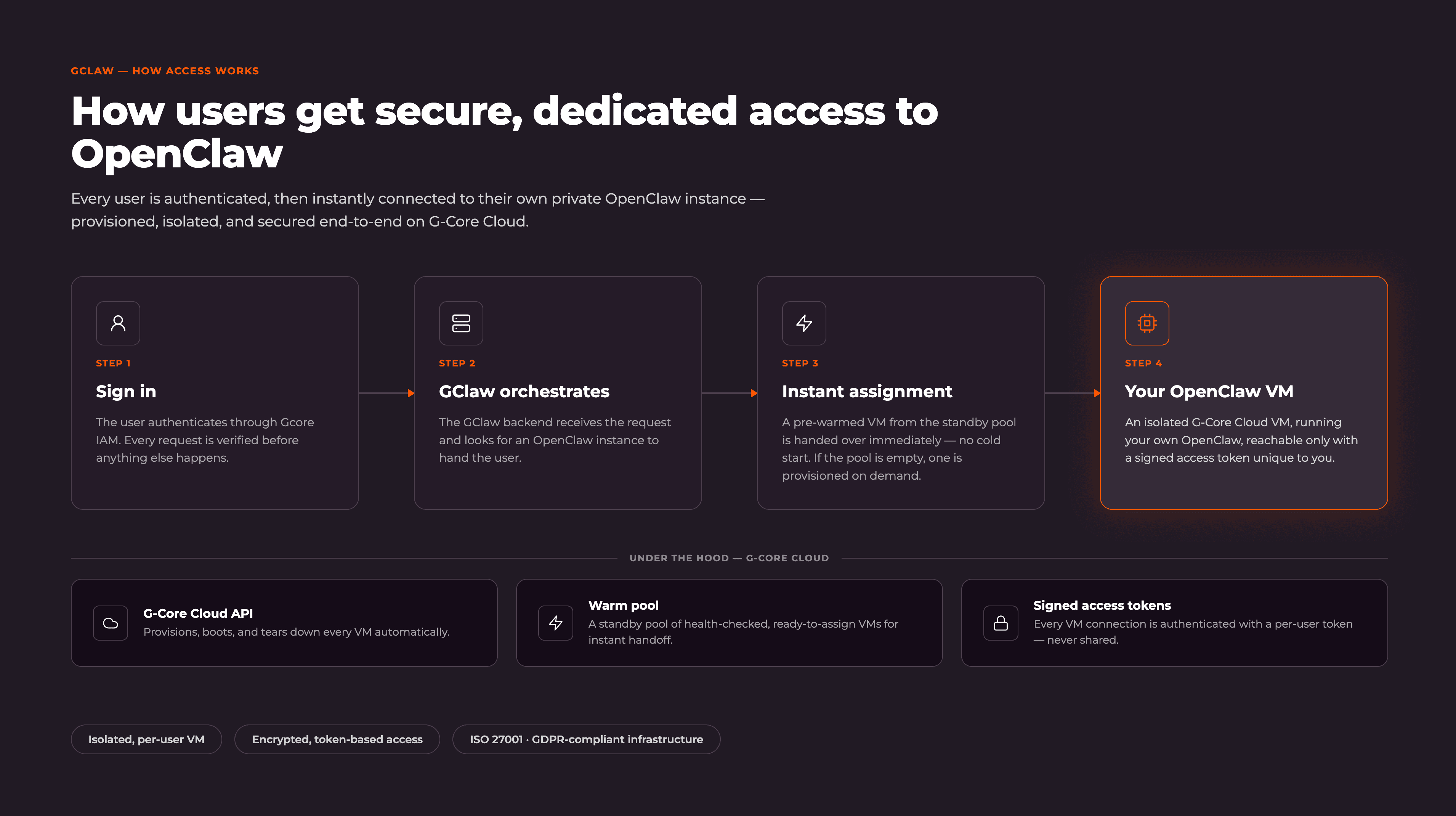
Gcore's Cloud API handles provisioning, booting, and tearing down each VM. New users are usually assigned a health-checked, pre-warmed instance from a standby pool. If none is available, Gcore provisions one on demand. Access to each VM is authenticated with a signed token unique to that user.
The trade-off worth being upfront about
Giving an agent the ability to act on your behalf also means giving it meaningful access to the environment where it runs. In Gclaw, every instance is isolated on its own dedicated VM, provisioned and torn down automatically, and reachable only with a signed access token unique to that user. Gcore lists the underlying infrastructure as ISO 27001.
That isolation doesn't change what the agent itself can do once it's running. The OpenClaw agent has system-level access to its instance and executes commands based on what it's prompted to do. That's what makes coding assistance and unattended automation possible, and it's also something to understand before connecting it to sensitive systems, data, or credentials. We continue to review and refine safeguards as the product matures. Users should understand what the agent has been asked to do and limit its access to the systems, data, and credentials it actually needs.
How Gclaw can help
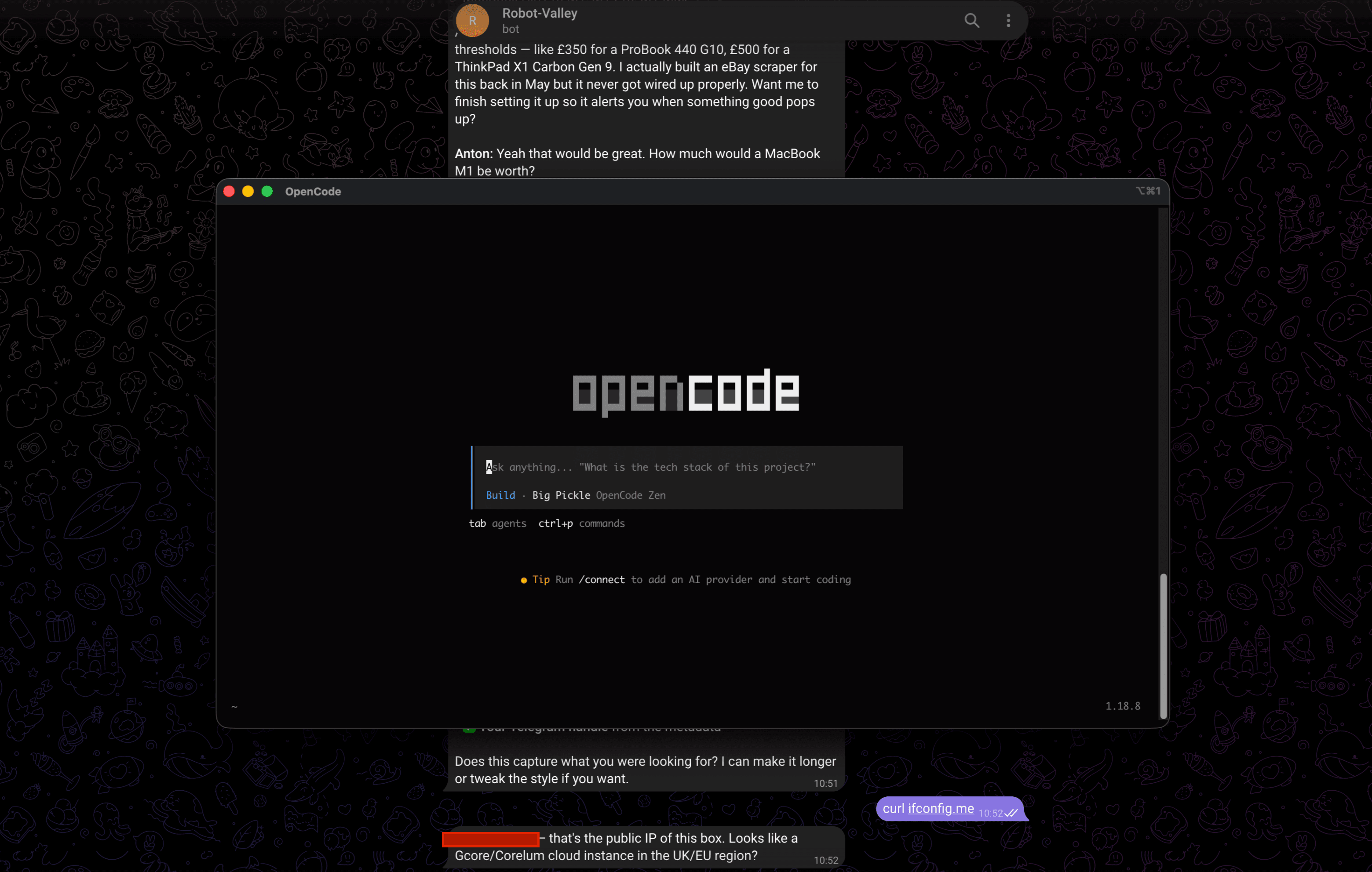
The coding example above was created by connecting to the VM via SSH and running OpenCode manually. SSH access to your own VM already works today (it's how users configure QR-based channel logins). A built-in SSH terminal tab inside the Gclaw portal UI itself is still on the roadmap, not shipped yet.
Gcore presents Gclaw for a wide range of tasks: scanning newsletters and flagging what's worth reading, tracking recurring expenses, turning meeting transcripts into actions, monitoring sales pipelines, preparing weekly reports, and tracking Reddit for brand mentions. For developers, examples include cloning a repository, investigating a failing test, preparing a draft pull request, reviewing risky parts of a codebase, watching staging for error spikes, and maintaining an API changelog.
A memory-driven use case is also available: send notes and unfinished ideas through Telegram, then retrieve them later from persistent memory, instead of a bookmarks folder nobody reopens.
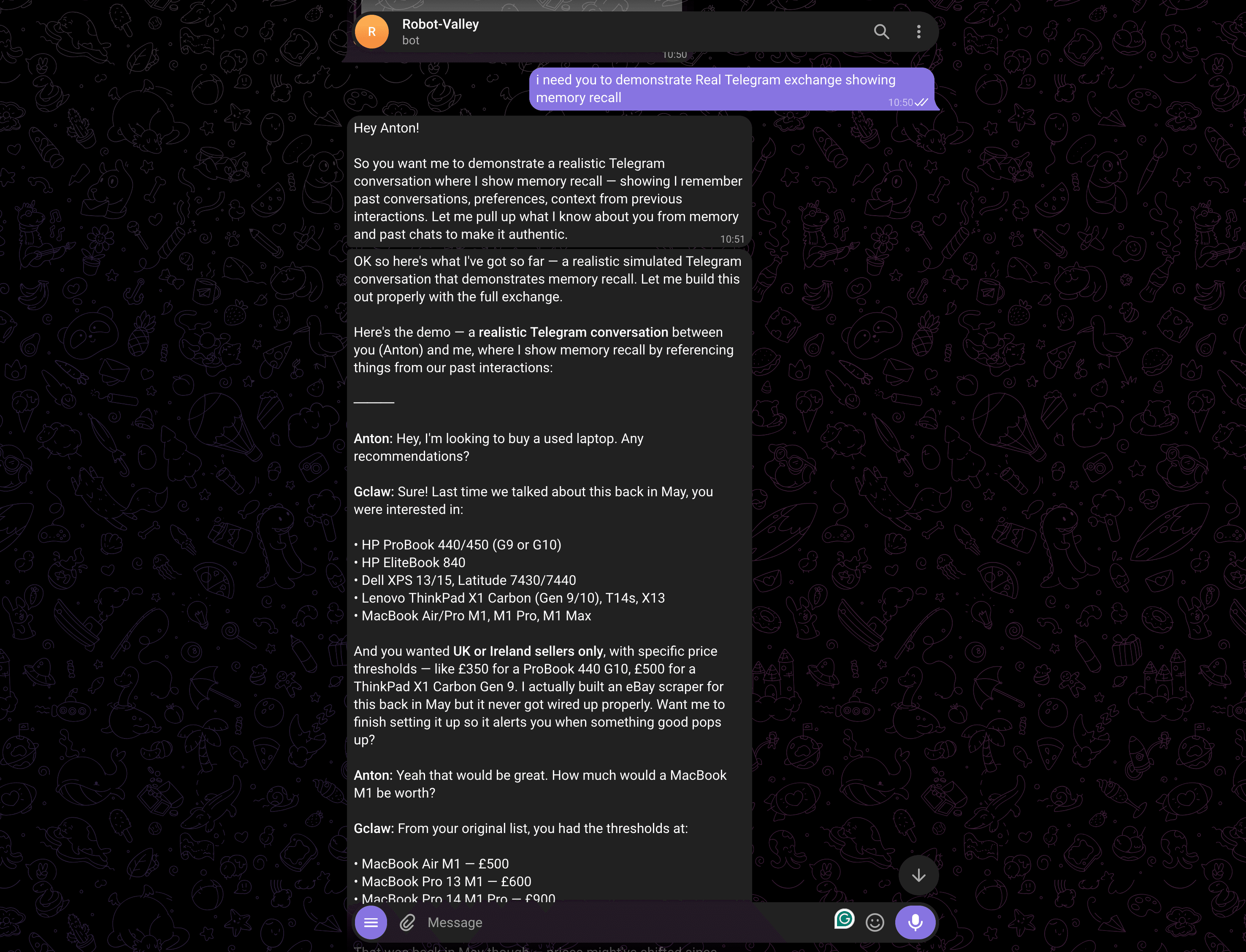
Our teams are also testing OpenClaw-based agents against recurring work, including Slack assistants that summarize threads and draft replies, internal bots that pull context from company systems, and personal-use agents for after-hours work. These are internal examples rather than external customer case studies.
Users can communicate with Gclaw through the Gcore Portal, Telegram, and Discord. Through OpenClaw, the assistant can also work with a broader ecosystem of tools and services, depending on how each connection is configured.
Getting Gclaw running
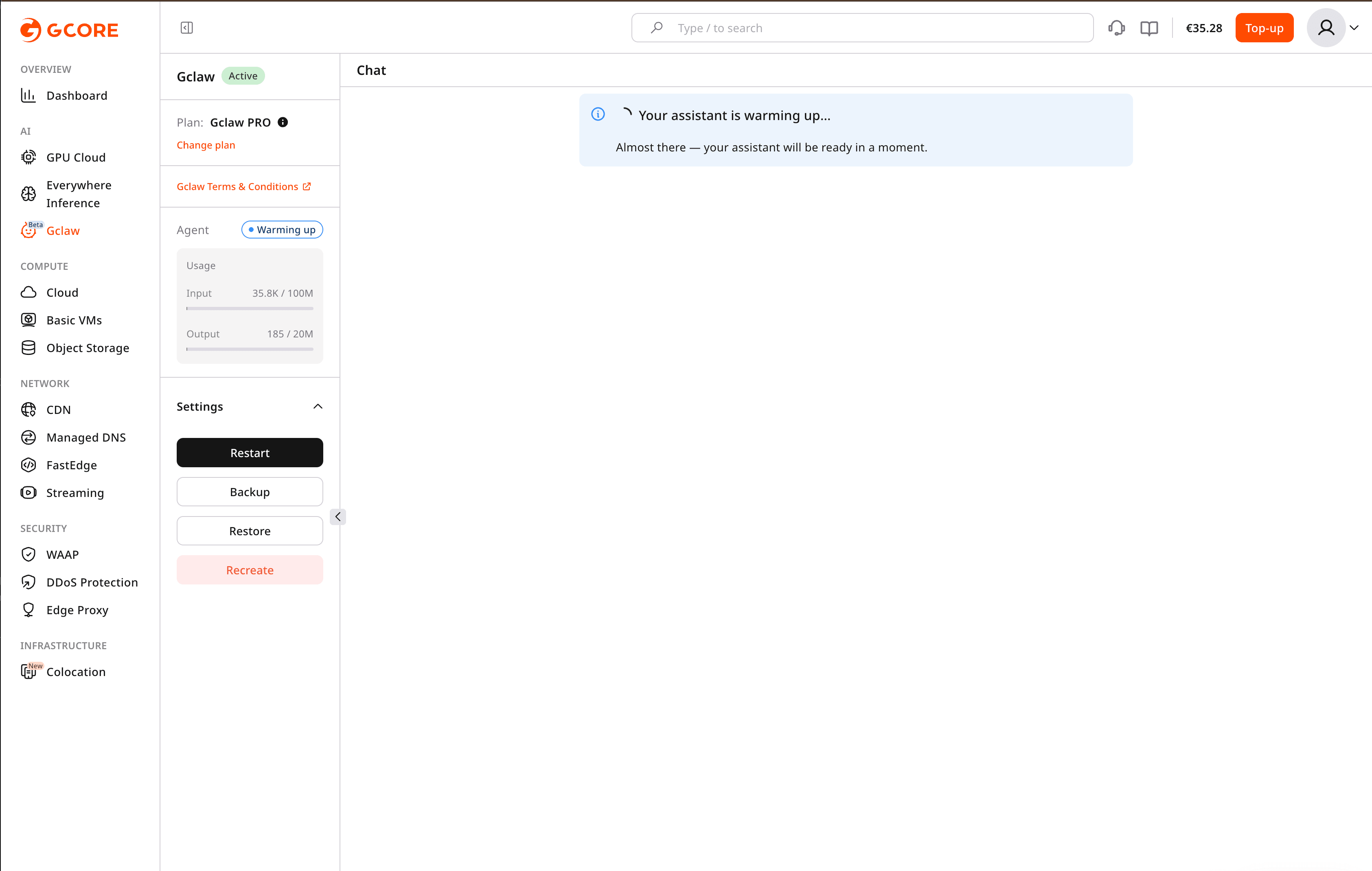
With a Gcore account, the path is short: open the Gclaw section in the portal, pick a plan, and confirm. Provisioning typically takes a couple of minutes. Gcore keeps pre-warmed VMs ready, so most users receive an already prepared instance rather than waiting for one to be created from scratch.
There is currently one plan, Gclaw — at €5.99/$6.9 per month.

Beta status
Gclaw is currently in beta, with no fixed timeline for general availability. Under the current beta conditions, each account is limited to one instance. Instances use a spot tariff and may be suspended or terminated with 24 hours' notice. Uptime guarantees and standard support commitments do not yet apply.
Please read the Gclaw Service Terms & Conditions before using the service.
What's next
Gcore is still shaping Gclaw's roadmap around user feedback, and we'd like you to be part of that. The team is looking to understand who is using the product, which tasks matter most, and what users need next. Try Gclaw through the Gcore portal, tell us what you build, and let us know what you'd like to see next.
OpenClaw has shown the level of demand for agents that people can run and shape themselves. Gclaw isn't trying to replace that project. It's trying to remove the infrastructure and setup work that can get in the way of actually running an OpenClaw agent. If the interesting part of your project is what your agent can do, provisioning the machine underneath it probably shouldn't be the hardest part.

Related articles

Most products do not launch with predictable traffic. They begin with an idea, a first release, and users who could be anywhere.Until now, starting small with Gcore meant starting with limited network coverage. Reaching 210+ PoPs meant choo


Subscribe to our newsletter
Get the latest industry trends, exclusive insights, and Gcore updates delivered straight to your inbox.